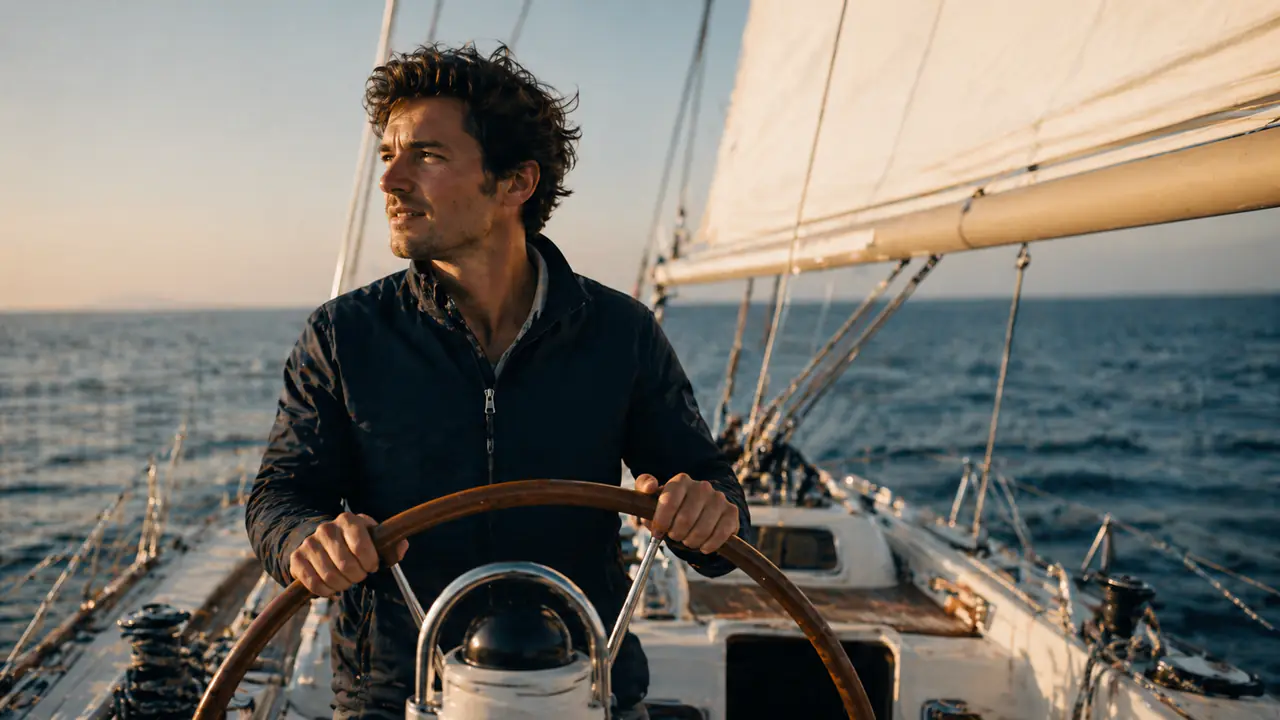
IYT Yachting Courses: How to Choose a Yacht Control Program
Open Sea offers yachting courses for different goals: first experience, working in a crew, bareboat charter, advanced training, and handling a sailing or motor yacht. The office and classrooms are in Turkey. Most programs are 11 or 14 days and combine theory with practice in Turkey.
How to Choose a Yacht Control Course
Which Yachting Courses and Training Formats to Choose
The choice depends on your experience and your goal after training. For first experience and working in a crew, Competent Crew is suitable. For bareboat charter, IYT International Bareboat Skipper is the right course. For active skippers, YachtMaster Coastal and Offshore are designed for upgrading skills, and for handling a motor vessel, the "Skipper + Motor" program is available.
The main 11-day courses include theory, on-board practice, and an exam, and take place in Turkey. The school in Turkey also offers in-person theory classes, introductory weekend courses, and docking practice.
Online courses for additional preparation, private online lessons, individual courses, and VIP training in Turkey are also available. For the VIP format, you can book the whole yacht for a personal program.
The team behind Open Sea has been teaching yachting since 2010. Through its work at previous schools and Open Sea, the team has trained students and issued more than 3,600 certificates. Compare the main programs below, then check the training costs, and documents received after the course.
I want to try yachting in a crew
Go as a crew member, not as captain — and not as a "passenger". Competent Crew is the right choice.
I want to charter a yacht independently
Bareboat charter in the Mediterranean, the Caribbean, or Turkey. The base course is Bareboat Skipper.
I am already a skipper, I want to grow
Long-distance and night passages, offshore miles. Upgrade with YachtMaster Coastal / Offshore.
I need a motor yacht
Handling a motor vessel up to 24 meters. The program is Skipper + Motor.
Which Yachting Courses and Format to Choose
The table shows four programs for different goals: from a first trip as a crew member to bareboat skipper, long-distance passages, and handling a sailing or motor yacht. Additional, individual, and VIP formats are arranged separately based on the goal and training location.
On narrow screens, the table can be scrolled horizontally.| Course | For | Duration | Price | Result |
|---|---|---|---|---|
| IYT Competent Crew | For beginners who want to work confidently as a crew member but are not yet planning to charter a yacht independently. | 11 or 14 days | 1,200 € | On-board skills and an IYT Competent Crew certificate. This certificate is not intended for bareboat charter. |
| IYT International Bareboat Skipper | For future skippers aged 18 and over. You can start with no experience. | 11 or 14 days | 1,250 / 1,400 € | Preparation for the IYT exam. After successful completion, graduates receive a Bareboat Skipper certificate and can charter a sailing yacht up to 24 meters for coastal cruising during daylight hours. |
| IYT YachtMaster Coastal / Offshore | For skippers who already hold a Bareboat Skipper certificate and have confirmed sailing experience. | 7 days | 1,100 € | Advanced training: night navigation, long-distance passages, watchkeeping, and sailing in challenging conditions. |
| Skipper + Motor | For those who need sailing training, motor vessel practice. |
11 or 14 days plus motor practice |
1,250 € motor practice — 60,000 ₽ | Training under the IYT Bareboat Skipper program, with separate motor yacht practice. |
The price listed is for tuition only. Flights, meals, transfers, and the issuance of the plastic IYT certificate are paid separately. For a detailed breakdown, see the pricing page.
Detailed information on the main course for future skippers is on the IYT Bareboat Skipper page.
Special Offer
The next groups start on schedule — choose a convenient date
Differences Between Yacht Control Programs
For each course — the goal, entry requirements, what you will do, and what you will receive at the end. Our curriculum follows international IYT standards and the school's own methodology for training during a sailing trip.
Competent Crew: A Prepared Crew Member
A course for those who want to sail as a crew member with understanding: help with docking, set and take down sails, understand commands and the captain's decisions. This certificate does not allow you to charter a yacht independently — but without it, it is harder to become a valuable team member and prepare for the skipper course.
Who is it for
- Those who are on a yacht for the first time and want to get to know the sea without the responsibility of commanding.
- Companions and family members of active skippers who want to be useful on board.
- Candidates for the Bareboat Skipper course who prefer to enter yachting through crew training.
Preparation before the course
No experience is required. The IYT standard has no age limit for Competent Crew, but we recommend a minimum of 14 years to comfortably handle a full training day.
What you will do on the course
- Sail handling. Setting and stowing the mainsail, jib, and gennaker, working with sheets and halyards, basic understanding of sail trim.
- Docking and anchoring. Crew roles during berthing, handling mooring lines, anchoring.
- Knots and rigging. Eight basic maritime knots, basic winch operation, safe handling of rigging.
- Life on board and safety. Life jackets, safety harnesses, moving on deck in rough seas, man-overboard procedures, cabin discipline.
- Basic navigation. Reading a nautical chart, understanding coastal navigation marks and buoys, basic compass work.
Bareboat Skipper: Independent Charter
This is the "charter" certificate that companies in Croatia, Greece, Turkey, the Caribbean, and other areas ask for. After this course, you can charter a sailing yacht up to 24 meters for coastal cruising during daylight hours under your own responsibility. The program is structured so you can start from scratch.
Who is it for
- Those planning to regularly charter a yacht and sail independently.
- Future owners or co-owners of their own yacht who need an international license.
- Those who need a clear and fast path from "never been on a yacht" to an IYT certificate.
Preparation before the course
No experience required. Minimum age — 18 years. The 11-day format is a comfortable pace from zero; the 14-day format is an extended program with more sea miles and confidence for the exam.
What you will do on the course
- Sailing yacht handling. Points of sail, setting and changing sails, reefing, working with sheets and guys, basic sail trim for wind and waves.
- Docking under power and sail. Approaching the dock alongside and stern-to, departing in different wind conditions, picking up a mooring buoy and anchoring — each student takes turns as skipper.
- Navigation. Plotting a course on a paper chart and on a plotter, calculating passage time, working with tides and currents, reading weather forecasts.
- Safety and emergencies. Man-overboard maneuver under sail and power, engine failure procedures, basic fire-fighting and safety equipment use.
- Radio communication and COLREGS. VHF radio operation, call protocols, collision regulations and signals. The VHF SRC certificate can be obtained alongside the course.
- Captain's role. Decision-making for the crew, daily planning, working with weather and changing plans. This is not theory — each student skippers the yacht during the training week.
More details about the sailing trip, daily schedule, and on-board conditions — on the program page.
Advanced Training — Coastal / Offshore
If you already have a Bareboat Skipper certificate and want to go further: night passages, offshore miles, more challenging sailing areas. This is not an alternative to the base course, but a step above — expanding your rights and skills.
Who is it for
- Active skippers who want to move beyond "coastal cruising" and plan longer passages.
- Those preparing for night passages, offshore races, or long-distance routes with a small crew.
- Yacht owners who need to demonstrate a higher level for serious insurers and captain's functions.
Preparation before the course
A valid Bareboat Skipper certificate or equivalent, confirmed sailing experience with accumulated sea miles. The IYT standard for YachtMaster Offshore requires significant practical experience, including night hours and watchkeeping.
What you will do on the course
- Night navigation. Route planning without visual references, working with navigation lights and buoys at night, keeping a logbook.
- Advanced meteorology. Working with synoptic charts and models, assessing fronts and squalls, choosing a weather window for a passage.
- Long-distance passage tactics. Planning a 100+ mile route, calculating fuel and provisions, choosing shelter, reporting to shore.
- Watchkeeping. Organizing crew shifts, handing over the watch, behavior under fatigue, radio discipline.
- Safety and medical. Serious emergency scenarios: fire on board, steering failure, evacuation, basic maritime medical care.
- Electronics. Advanced work with AIS, plotter, radar, and autopilot, diagnosing failures.
Skipper + Motor: Sailing Base and Motor Practice
The program for those planning to operate a motor yacht — in charter, on their own boat, or for weekend use. Sailing training follows the IYT standard, with a separate motor module including practice on a motorboat.
Who is it for
- Future motor yacht owners who need comprehensive training.
- Those who want both sailing and motor skills to freely choose their leisure format on the water.
Preparation before the course
No experience is required. The sailing part takes place on a training yacht, the motor part is separate practice on a motor vessel. Logistics and schedule are arranged for the group.
What you will do on the course
- Sailing base at skipper level. Full Bareboat Skipper program: sailing handling, docking, navigation, safety.
- Motor vessel handling. Maneuvering under power, working with the propeller and bow thruster, planing, behavior in waves.
- Docking and anchoring on a motor yacht. Berthing in different winds, departing stern-to, anchoring without sails.
Can You Take a Captain's Course from Scratch?
If your goal is bareboat charter, yes, you can start directly with the captain's course. The program is designed for beginners. Competent Crew is a better choice if you do not yet want the responsibility of being a skipper, but instead want to first understand the yacht, the crew, commands, and basic actions on the water. Based on our experience at Open Sea, the decisive factor is not your starting experience, but the number of conscious repetitions on board.
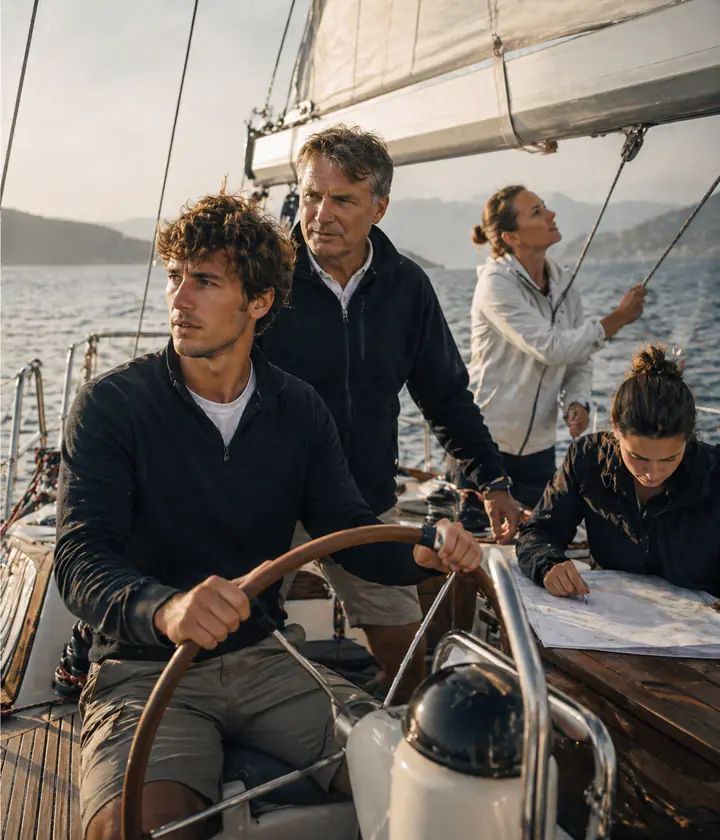
The key is not the difficulty level or the number of days. The key is what you want to do on the water six months after the course. Your answer determines the choice:
-
1
If you want to charter a yacht yourself
Choose Bareboat Skipper, 11 or 14 days. This is a direct and predictable path to an independent charter with an international license.
-
2
If you do not want to be a skipper
Competent Crew is sufficient. You will sail confidently as a crew member without command responsibilities. You can always take the BBS course later if you wish.
-
3
If you are already a skipper and feel limited to coastal areas
Coastal or Offshore — an upgrade, not a replacement for BBS. It makes sense only when you have sea miles and a clear goal: night passages, long-distance routes, racing.
-
4
If you are planning a motor yacht
Choose the "Skipper + Motor" program. One package covers sailing fundamentals, motorboat specifics. Separate "short motor licenses" are not accepted by most charter companies.
What Skills Remain After the Course
The main result of the course is not just the exam, but a set of actions that the student can repeat on a real yacht: leave the marina, set the sails, plot a route, make a weather decision, organize the crew, and return to port. For all programs, the principle is the same: each student takes the helm in turn and is responsible for a maneuver or passage. The specific set of skills depends on the chosen course.
Docking and Anchoring
Approaching the dock alongside and stern-to, departing in different wind conditions, picking up a buoy and anchoring — each student takes turns as captain.
Sailing Yacht Handling
Setting and changing sails, reefing, points of sail, basic trim for wind and waves.
Course Plotting
Reading paper charts, working with a plotter, calculating time and fuel, weather forecasting and choosing a passage window.
Emergency Situations
Man-overboard maneuver, engine failure procedures, fire on board, basic maritime medical care.
Radio and COLREGS
VHF radio operation, call protocols, collision regulations and signals. The VHF SRC certificate can be obtained alongside the course.
Decision-Making and Crew Management
Daily planning, working with weather and changing plans, delegating tasks to the team. On the water, this is more important than any exam.
The certificate is a consequence, not the goal. The IYT certificate is issued after the course automatically if the exam is passed. But a charter company evaluates you based on how you dock and read the weather, not on a plastic card. That's why the course is built around practice, not around preparing for a written test.
Where to Go After Choosing a Course
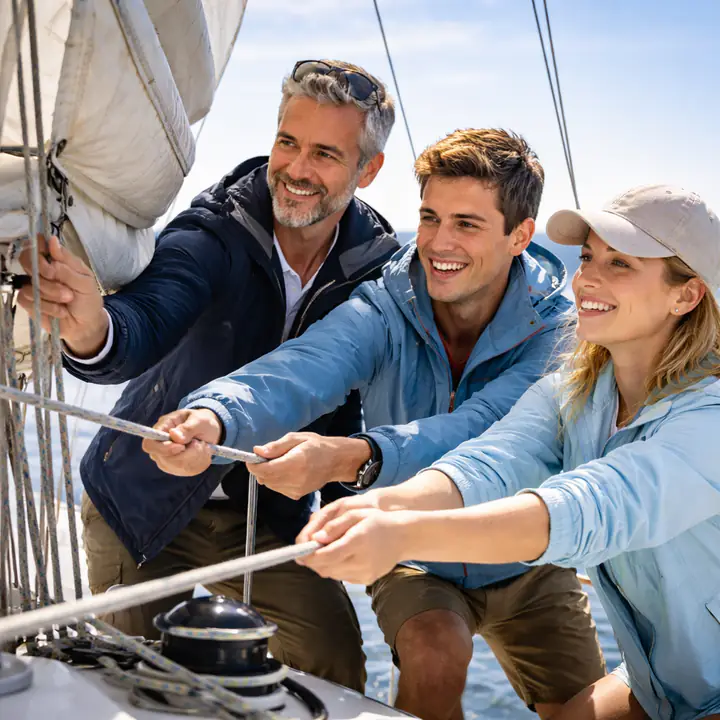
What a Captain's Course Looks Like
Day by day: the sailing trip, schedule, on-water exam. The school's main course in detail.
View program →
Full Cost and Additional Expenses
What is included in the course price, what is separate, and what seasonal discounts apply to your dates.
See breakdown →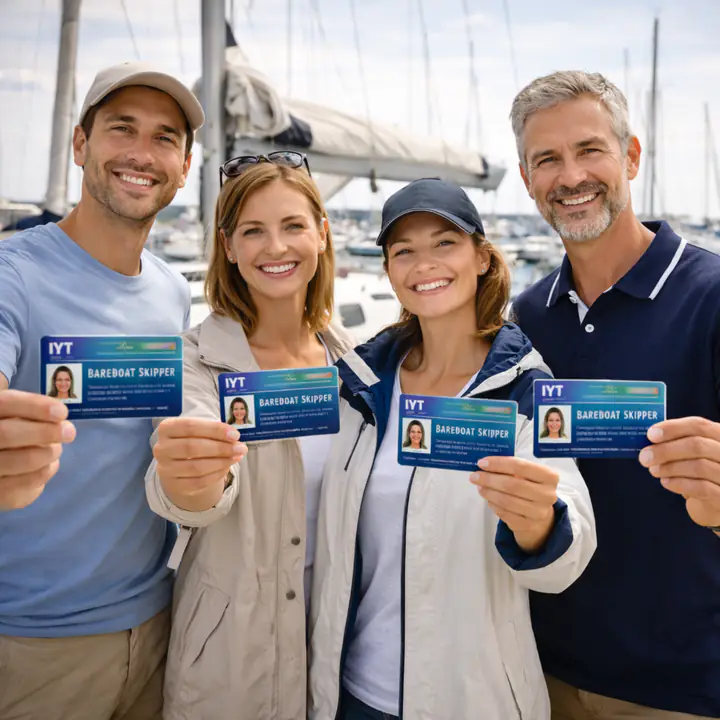
What Documents the Graduate Receives
IYT international licenses: what is issued, where they are valid, and how long the plastic card takes.
Open documents →We'll Help You Choose a Course
Describe why you want to learn yacht control — charter in Greece, a motorboat for the family, upgrading your skills, or just trying it out. We'll recommend the format, sailing area, and nearest available dates. No pressure, no obligation.
Leave a Request
We'll call you back and help you choose a program based on your goal, level, and dates.